
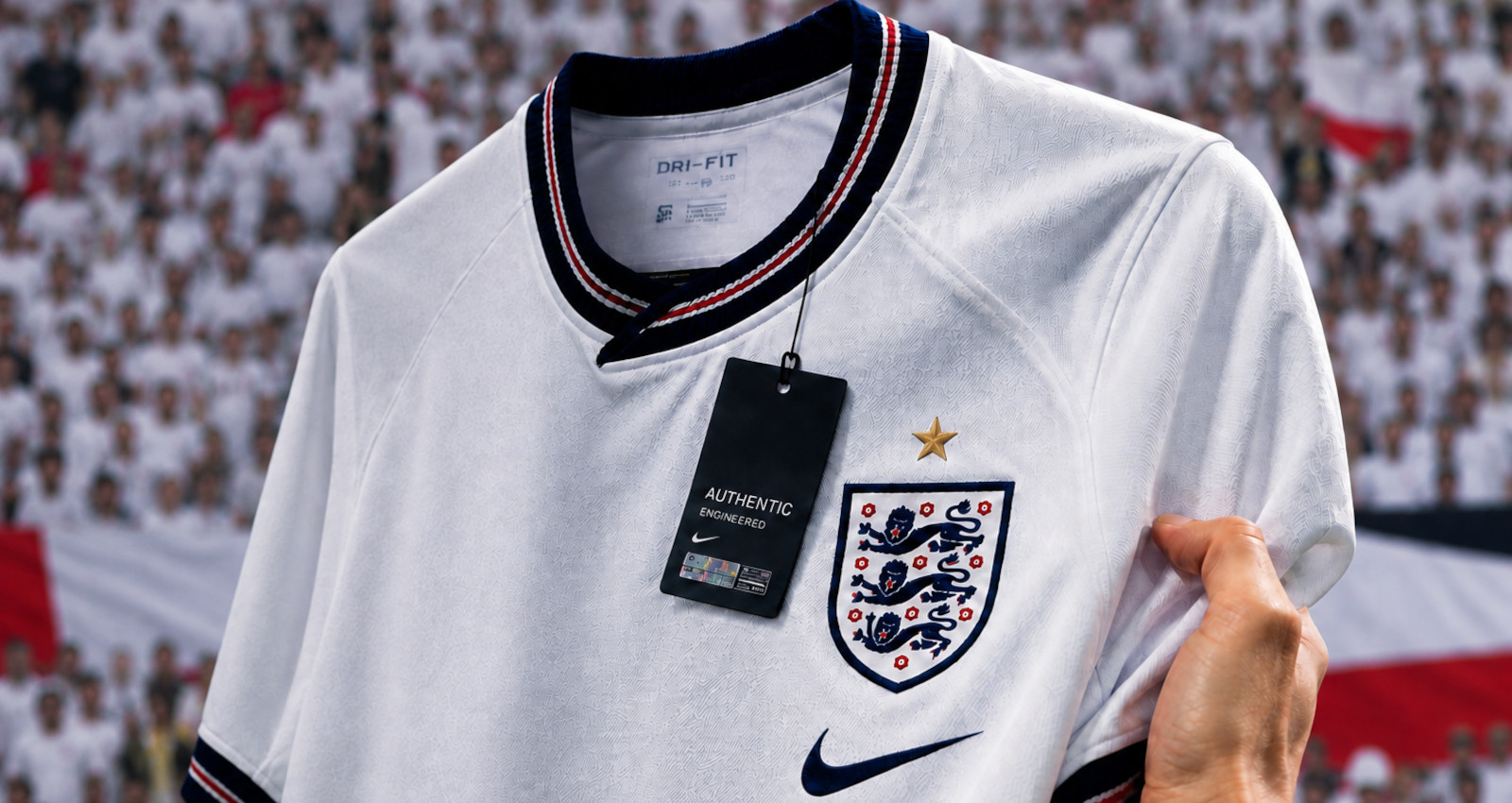
The release of the England national team kit for the 2026 FIFA World Cup ignited an intense public debate over retail pricing. With official adult replica shirts retailing at an all-time high of £104.99 and match-specification authentic versions climbing to £134.99, media outlets and supporters labeled the pricing structure as outright unaffordable. Into this commercial vacuum moved the modern counterfeit market, offering visually nearly-indistinguishable alternatives for just £12. This whitepaper uses advanced Choice-Based Conjoint (CBC) analysis to investigate whether cheap fakes represent permanently lost demand or if premium sportswear brands are misdiagnosing the threat.
The study, which surveyed 290 active UK kit buyers under realistic purchasing simulations, reveals that unofficial fakes have become a highly material competitor, capturing a substantial 22% of baseline market share. However, the research explicitly warns against the intuitive commercial urge to engage in defensive price cuts. When the official Nike replica price was modeled at a significantly lower £40, counterfeit share fell by a mere three percentage points. Instead of converting bootleg buyers, the price slash caused severe portfolio cannibalization, training existing premium customers to trade down and pulling demand directly away from Nike’s high-margin authentic tiers.
Through sophisticated attribute importance modeling, the paper demonstrates that brand equity remains the dominant driver of customer choice at 38.9%, far outweighing physical specifications like moisture-wicking fabric, knit textures, or embroidered crest applications. When the counterfeit option was entirely removed from the simulation, a striking 80% of those opportunistic buyers immediately migrated right back to the official Nike ecosystem rather than opting out. This crucial behavioral shift proves that the counterfeit segment is driven by ease of availability rather than a fundamental rejection of the brand.
For commercial directors, sports marketers, and luxury portfolio managers facing high-quality piracy, this report offers a data-driven defense of premium pricing architectures. The findings indicate that optimizing official prices closer to the elasticity threshold of £119.99 actually boosts total simulated revenue by 11.7% while maintaining brand prestige. Rather than competing downward against a £12 price point that premium brands cannot realistically win, the strategic priority must shift toward aggressive platform enforcement, authentication tracking, and targeted segment-level modeling. Read the complete analysis to discover how to protect your brand premium and de-risk your sports portfolio monetization.