
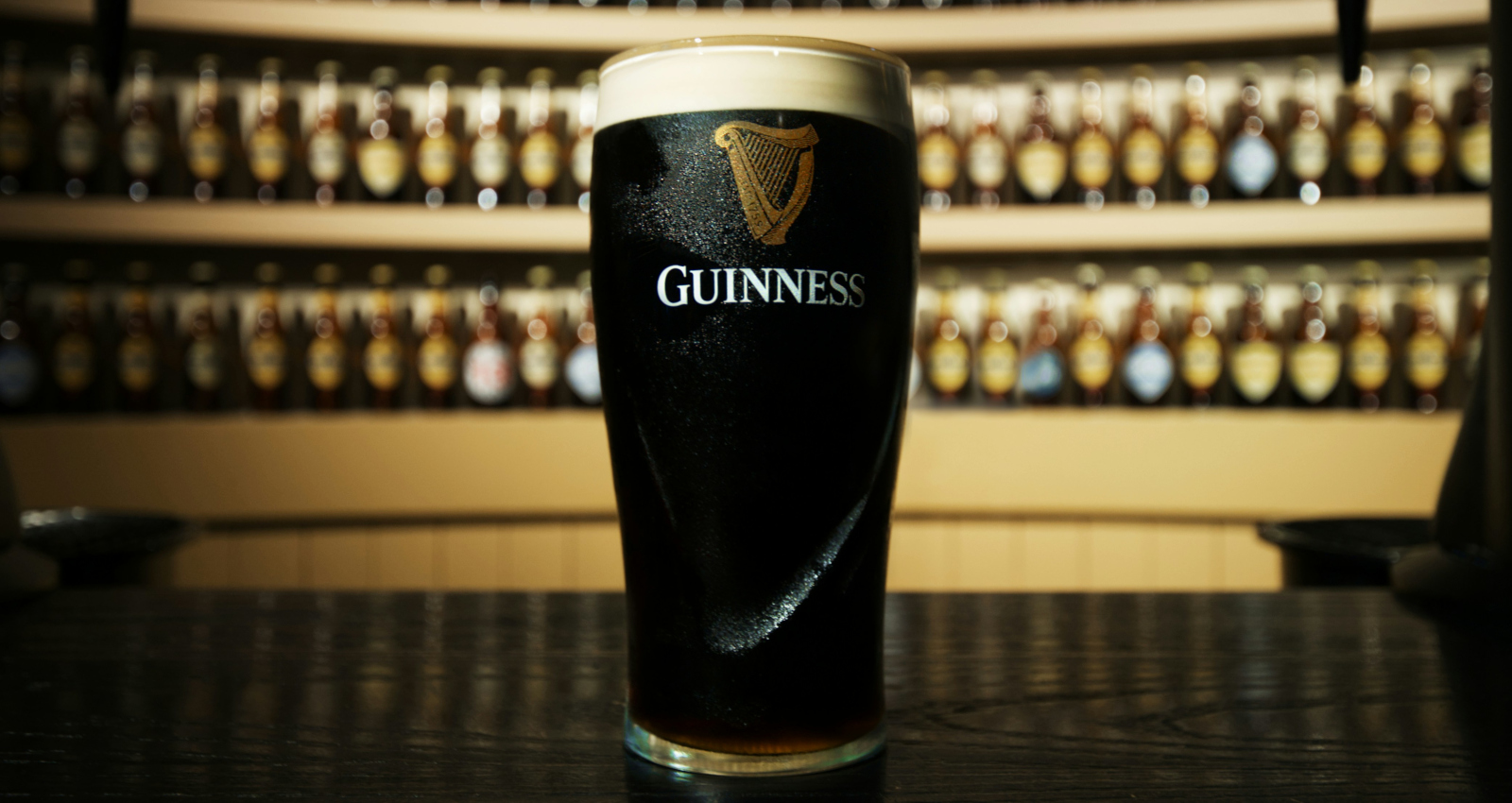
The UK retail landscape is witnessing a hyper-competitive surge in private label dominance, forcing a critical strategic choice: is the traditional “look-alike” copycat strategy truly the most effective path to conversion for discounters, or should established brand owners fiercely defend their visual assets? To explore this dynamic, we analyzed 2,670 consumer choices surrounding Aldi UK’s launch of Mulligan’s Stout—a 4-pack of private-label cans designed to compete head-to-head with the undisputed category leader, Guinness.
The baseline market choice reflects a standard copycat setup, with Guinness retailing its iconic black can with a gold harp logo at £5.63, and Aldi’s Mulligan’s emulating that visual footprint exactly via a black can with a gold castle logo at £4.79 (a 0.84 price index). While launching at a 0.84 index satisfies traditional Revenue Growth Management (RGM) levers to project value, advanced choice-based conjoint simulation reveals that this direct copycat architecture fails to justify its price tag to shoppers. In fact, true consumer willingness to pay (WTP) for the launched look-alike layout sits at just £4.13, resulting in a lower-than-optimal volume share.
Instead of mirroring the market leader, the conjoint data highlights that breaking away from the copycat mold to leverage a fully optimized, unique identity would yield far higher commercial returns. The winning private label combination across the study used the Mulligan’s brand name paired with a premium gold can and a gold harp variant logo. This specific structural optimization completely resets consumer value perception, unlocking an extraordinary willingness to pay of £5.69—a 0.99 price index that nearly eliminates the pricing gap to Guinness while simultaneously accelerating purchase volume share by one-third.
Ultimately, the study demonstrates that pricing and packaging cues are not static operational variables, but active competitive weapons. Private-label brands can capture deep consumer surplus and disrupt a category differently by moving closer to brand-leader pricing with highly optimized aesthetics. Conversely, branded players must use segment-level conjoint analytics to isolate and quantify exactly which elements of their packaging architecture generate the highest premium protection before copycats erode their power.