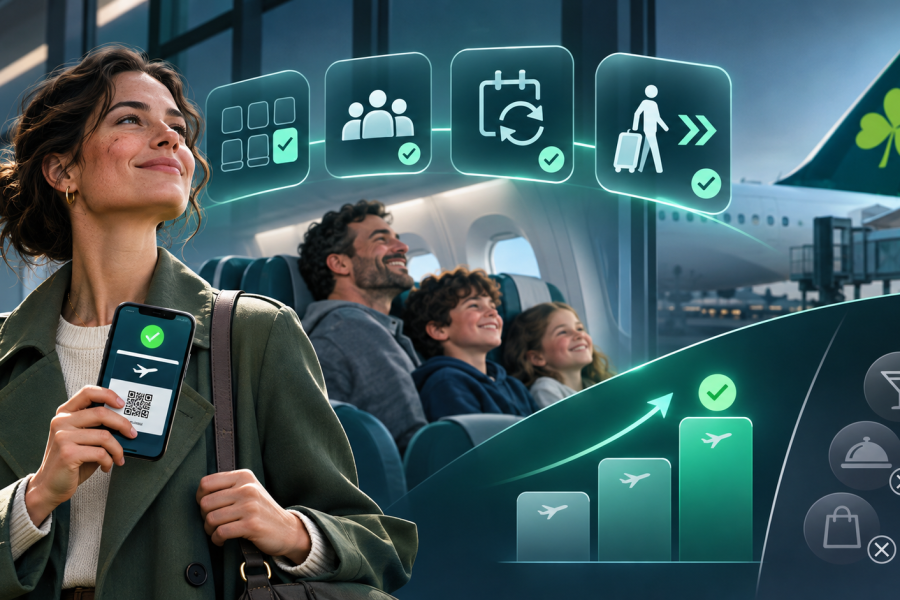
Customers don’t pay most for what makes a product feel premium. They pay for what makes it feel certain. Across two EPIC studies of nearly 600 Aer Lingus economy flyers, features that remove anxiety beat those that add indulgence, and packaging the offer around that insight lifts modelled revenue by up to 16.7% per flight. The lesson travels to any brand that sells tiers, bundles or add-ons.
Airlines make a useful lab. Every extra is priced and chosen separately, so the trade-offs customers make are easy to see. We ran two studies with Aer Lingus flyers:
1. The Ancillary Services Opportunity: what economy flyers really value when price is taken out of the equation. Download the white paper
2. The Hidden Value in the Fare Ladder: how better packaging and pricing can unlock Aer Lingus ancillary revenue. Download the white paper
Why brands keep adding the wrong extras
When growth stalls, brands add: a premium tier, a new feature, a richer bundle. But ask people what they want and they say yes to almost everything. Force them to choose, and a much shorter list survives. That shorter list is what they pay for.
What do customers value when price is removed?
Certainty. With all 22 features presented at the same price, the features that rose to the top were not the most premium. They were the ones that make an uncertain part of the journey feel handled: standard seat selection (+0.51), preferred seat selection (+0.43), flexible flight changes (+0.30), priority boarding (+0.29) and guaranteed seating together (+0.17).
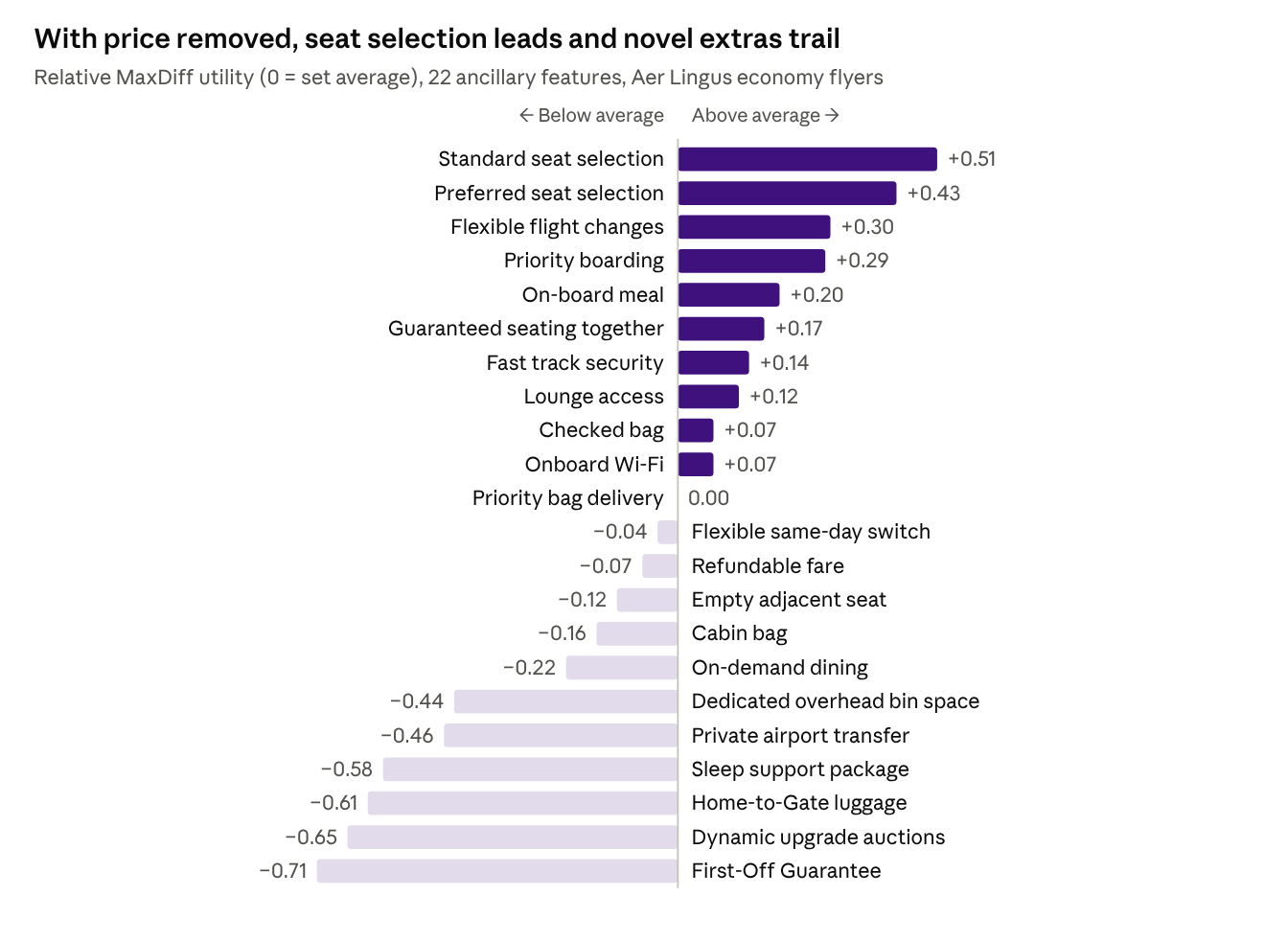
EPIC Insights MaxDiff study, n=296 Aer Lingus economy flyers, all 22 features
Grouped by what they offer, only assurance features scored above average (+0.11). ease (−0.13) and indulgence (−0.29) trailed. Novel ideas fared worst: dynamic upgrade auctions scored −0.65, because bidding adds the very uncertainty customers want removed.
The kind of certainty also shifts by customer. Families with young children want their party seated together. Business travellers want a fuller-service trip. One label can hide several buyers.
Read the full MaxDiff results. All 22 features, the benefit-type and journey-phase analysis, and the full segment read are in The Ancillary Services Opportunity. Download the white paper
What happens when price goes back in?
The preference held once real fares were attached, and it exposed a weak middle. Aer Lingus sells four economy tiers, but the top one has only four seats a flight. For everyone else, demand split between the cheapest fare and the loaded Advantage tier. Plus, in between, won just 15%.
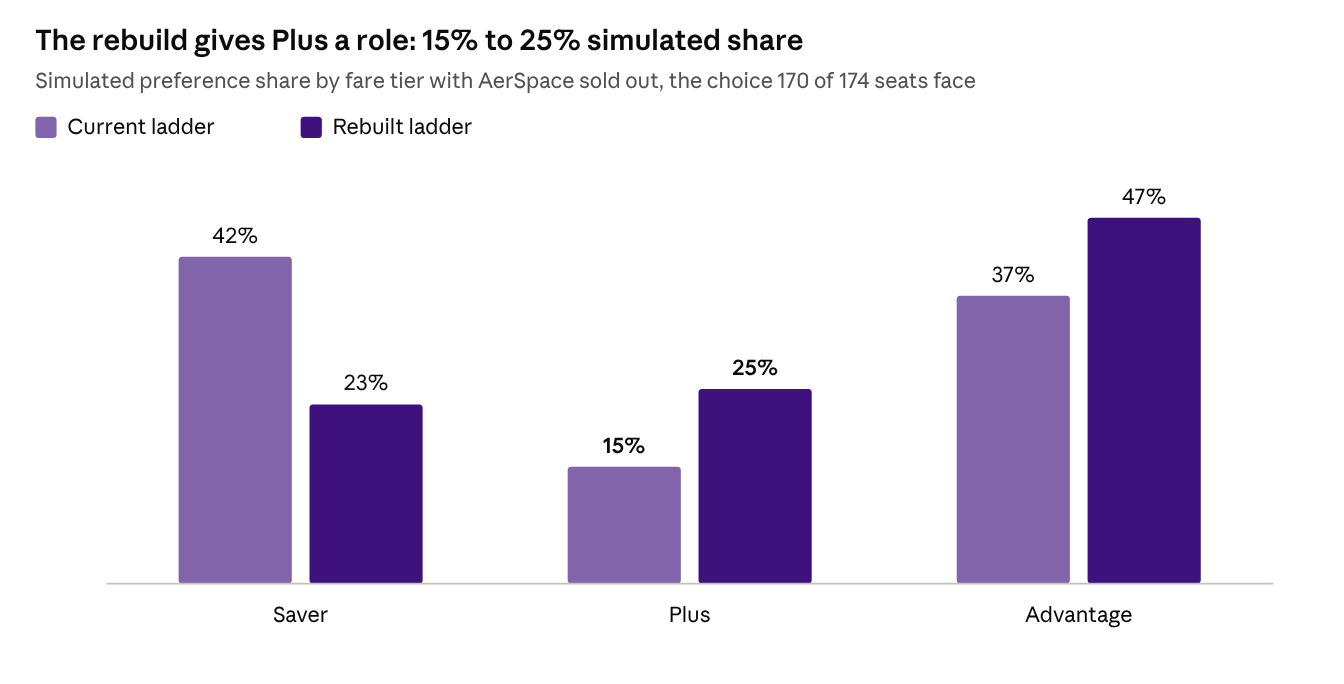
EPIC Insights choice-based study, n=287 Aer Lingus economy flyers; the remaining share chose none of the fares
Passengers were not refusing to pay. They were skipping a tier that did not buy enough. Giving each tier a distinct role lifts Plus to 25% and modelled revenue by 10.4% per flight. Repricing on top takes the uplift to 16.7%, about €3,545 per flight, without a single new product.
See the full simulation. Feature importance, the three-scenario share model, the rebuilt ladder and the pricing curves are in The Hidden Value in the Fare Ladder. Download the white paper
What this means for brands beyond airlines
Aer Lingus is the case, but the behaviour is not specific to flying. Anyone selling tiers, bundles or add-ons, from subscriptions to grocery multipacks to financial products, faces the same choices.
- Lead with reassurance, not indulgence. Build your promise around the moment your customer feels least sure.
- Test what customers trade for, not what they claim to like. Ideas that win in a workshop can finish last at the checkout.
- Give every tier a reason to exist. A middle option that buys too little gets skipped.
- Package benefits the way customers experience them. Seating together was worth €30 as one add-on and €14 buried in a fare. Where a benefit sits changes what it is worth.
Certainty has a price. Measure it before you set it.
For most brands, the opportunity is not more extras. It is a sharper promise: tiers with a clear reason to exist, and reassurance sold in the form customers actually want to buy it.
Get both white papers
The Ancillary Services Opportunity (MaxDiff): which of 22 features economy flyers prioritise, and how preferences shift by segment. Download
The Hidden Value in the Fare Ladder (conjoint): the rebuilt ladder, the pricing curves and the €3,545-per-flight case. Download
If you are deciding what your next tier, bundle or launch should promise, talk to EPIC. We can show you which benefits your customers actually trade for, and what each one is worth, before you take it to market.